
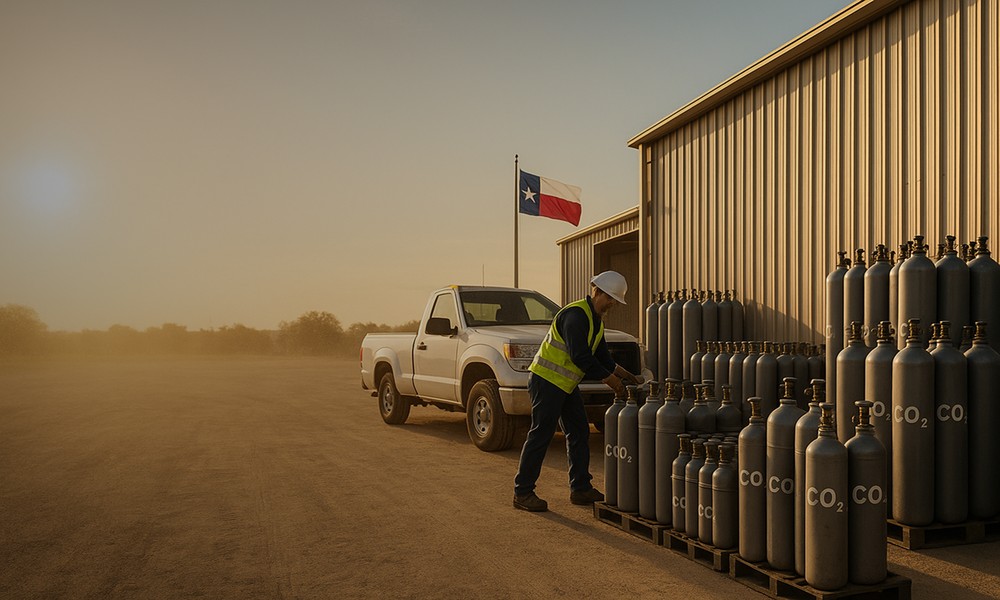

If you already understand how critical CO2 is to daily operations, you also know that supplier choice affects consistency, safety, and uptime. I look at CO2 suppliers through a practical lens. I focus on purity, delivery reliability, cylinder options, service coverage, and technical support. You benefit when these pieces work together because CO2 is not forgiving when supply or quality slips.
In this guide, I explain how to think about choosing a CO2 partner in Texas, what matters for restaurants, bars, food processing facilities, and venues, and why many businesses turn to a CO2 supplier in Texas with broad coverage and dependable systems. I also explain how a strong CO2 gas supplier supports growth, safety, and predictable operations across the state.
Why CO2 quality and consistency matter
I always start with purity and consistency. Food and beverage operations depend on clean gas for carbonation, draft systems, freezing, and packaging. Any fluctuation in pressure or contaminants shows up fast in taste, foam, shelf life, or equipment issues. Industrial and venue use adds another layer where stable pressure and traceable quality affect performance and safety.
When you evaluate suppliers, look for these basics:
- Beverage grade CO2 certified for direct food contact
- Documented testing and batch traceability
- Consistent pressure across cylinders
- Clear safety handling and support
These are not extras. They protect your product, your staff, and your equipment.
How different Texas operations use CO2
I see wide variation in how CO2 gets used across Texas. Restaurants and bars rely on it for clean pours and consistent carbonation. Breweries and food producers use it for flash freezing and modified atmosphere packaging that helps control spoilage. Venues and events depend on stable pressure for fog effects, paintball systems, and rapid inflation.
Industrial and manufacturing users apply CO2 for welding support, water treatment pH control, fire suppression, and greenhouse enrichment. Each use case places different demands on purity, volume, and delivery timing. A supplier that understands these differences reduces guesswork and downtime.
Matching cylinder size to your operation
One mistake I see often is choosing cylinder sizes that do not match usage patterns. Oversized systems waste space and money. Undersized systems lead to runouts and service disruptions.
Here is how I suggest thinking about it:
- 20 lb cylinders
Best for cafes, small restaurants, mobile food service, office beverage systems, taprooms, and event companies with moderate use. - 50 lb cylinders
Fit high volume restaurants, busy bars with multiple taps, entertainment venues, food processing facilities, breweries, and metal fabrication shops. - Large bulk cylinders
Make sense for breweries, food production plants, and industrial sites with steady high demand.
A supplier that offers all three options gives you flexibility as demand changes.
Why coverage across Texas matters
Texas operations often scale fast or operate in multiple cities. I place a lot of weight on service coverage because delivery gaps create risk. Reliable access in Dallas, Houston, San Antonio, Austin, Fort Worth, and surrounding areas helps keep standards consistent across locations.
Broad coverage also supports events and seasonal demand spikes. You avoid last minute scrambling when a supplier already has inventory and delivery routes in place.
Why Southwest Gases stands out
When I look at Southwest Gases, several factors explain why they are often chosen over other options. They supply 99.9 percent pure beverage CO2 certified for direct food contact, with rigorous contaminant testing and full batch traceability. That level of control supports both quality and compliance.
They maintain an extensive inventory of 20 lb, 50 lb, and bulk cylinders, which helps prevent downtime caused by shortages. Their cylinder systems are designed for consistent pressure, and their technical specialists support proper setup and use. This matters if you run complex draft systems, packaging lines, or industrial processes that rely on stable performance.
They also serve a wide range of sectors across Texas, including restaurants, bars, breweries, food processors, manufacturers, greenhouses, and venues. That breadth shows up in practical recommendations that align gas specs, moisture levels, and pressure with real operational needs.
Safety and support as part of supply
I never separate gas supply from safety. Southwest Gases places strong emphasis on handling instructions, emergency guidance, routine safety checks during deliveries, and professional cylinder connections. Access to technical support adds another layer of confidence, especially for high volume or regulated environments.
For many operations, this support reduces internal burden. Your team focuses on service or production while trained professionals handle gas related risks and compliance details.
Beyond CO2, a full gas partner
Another advantage I consider is the ability to source multiple gases from one supplier. Southwest Gases also provides nitrogen, argon, propane, and helium. For businesses that use several gases, this simplifies logistics and service coordination.
They support industrial and commercial needs with regulators, valves, manifolds, flow control systems, and monitoring equipment. Integrated solutions help align gas supply with real world usage rather than forcing workarounds.
How to decide if they are right for you
I suggest asking these questions:
- Do you need beverage grade CO2 with documented testing and traceability?
- Do you operate in one or more Texas cities with varying demand?
- Do you want flexible cylinder sizes that reduce runouts?
- Do you value technical support and safety guidance alongside supply?
If you answer yes to most of these, Southwest Gases fits the profile of a long term partner rather than a short term vendor.
Choosing a CO2 supplier is about reliability and fit. When supply stays consistent, pressure stays stable, and support stays available, your operation runs smoother. That is the outcome I look for when recommending a CO2 partner in Texas.
